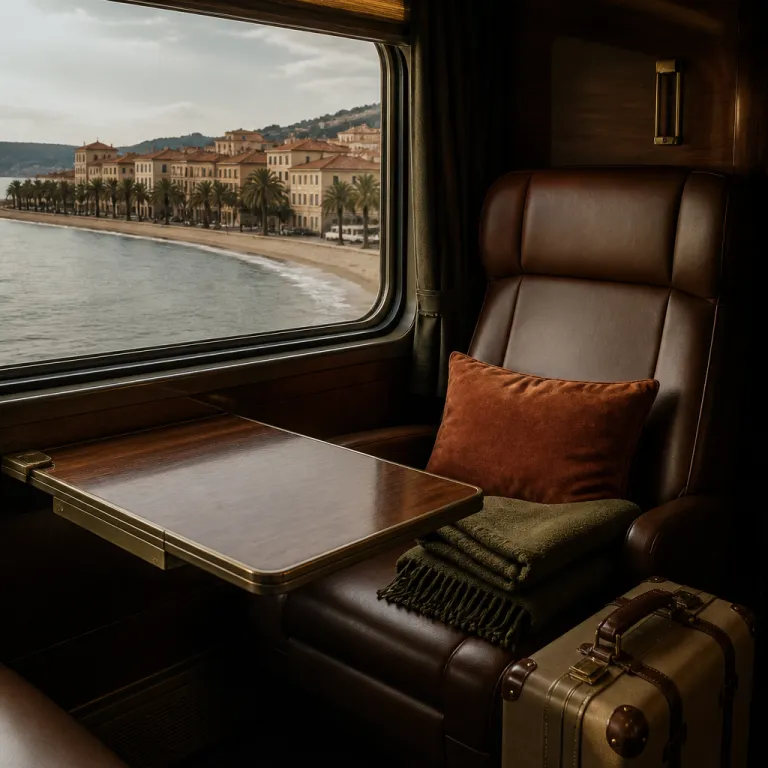
Why Cannes by rail is the new first‑class cabin
Arriving in Cannes by train changes the entire rhythm of your trip. What used to be a default short‑haul flight is now often a Paris–Nice–Cannes rail itinerary, a quiet status signal among European travelers who care about both comfort and carbon footprint. You step off the train at Cannes Gare, not a remote terminal, and your hotel car is five minutes away rather than a 45‑minute transfer.
France’s national rail operator SNCF now treats the Paris to Cannes route as a flagship corridor, with TGV InOui services offering first‑class cabins, at‑seat service and stable Wi‑Fi. On a typical high‑speed train journey from Paris to the Riviera you leave Paris Gare de Lyon after breakfast, glide past lavender fields by lunch and roll into Cannes in time for an apéritif on the Croisette. For luxury hotel guests this means a same‑day check‑in without jet lag, airport queues or the stress of delayed flights.
Growing interest in luxury train travel has also revived more opulent options, from Venice Simplon‑Orient‑Express journeys that include gourmet meals to curated European rail itineraries that link London, Paris, Nice and Cannes. Industry operators now position “Luxury train journeys to Cannes without flying” as a credible alternative to short‑haul flights, not just a nostalgic indulgence. For a premium hotel booking in Cannes, arriving rested, hydrated and already in Riviera mode is a subtle but real upgrade to your entire stay.
From Paris to Cannes: TGV comfort, timing and how to book
The backbone of rail travel between Paris, Nice and Cannes is the high‑speed TGV line between Paris Gare de Lyon and Cannes. Direct TGV InOui trains cover the roughly 930‑kilometre route in about five hours and fifteen minutes, which is competitive with flying once you factor in transfers and security. You board in central Paris, settle into a wide seat with your luggage nearby and watch the landscape shift from Île‑de‑France suburbs to Provençal hills.
For most travelers the smartest move is to book train tickets through SNCF Connect, the official booking platform, or via RailEurope if you are combining several European train segments. Both allow you to buy tickets in advance, choose between standard and first class and apply a Carte Avantage discount card if you hold one. On busy dates the Cannes‑bound TGV services sell out in first class, so serious hotel guests should reserve train seats as early as they would a sea‑view suite.
Budget‑conscious travelers on the Paris–Nice–Cannes corridor sometimes opt for Ouigo, the low‑cost TGV brand operated by SNCF, which runs separate trains with simpler service but the same high‑speed track. Whether you choose TGV InOui or Ouigo, you still arrive at Cannes station in the heart of town, a short walk or taxi ride from the Croisette’s palace hotels featured in our honest guide to luxury hotels in Cannes. For travelers who value time, comfort and sustainability, this Paris to Cannes rail combination is now the default, not the compromise.
Nice to Cannes by TER: the Riviera’s most elegant commute
Once you land at Nice Côte d’Azur Airport, the most efficient way to reach Cannes is not a private car but the regional TER train. The Nice TER service runs roughly every 30 minutes, costs around 7 euros in second class and covers the Nice to Cannes distance in about half an hour. You board at Nice Saint‑Augustin or Nice Ville station and step off at Cannes Gare, already on Rue Jean‑Jaurès and minutes from the seafront.
On this short stretch the broader Paris–Nice–Cannes rail narrative becomes very tangible, because you see the Mediterranean almost the entire way. The TER train hugs the coast, passing Antibes, Juan‑les‑Pins and small halts sur mer where locals step off with beach bags rather than suitcases. Compared with an 80‑euro private transfer or a helicopter that can exceed 150 euros, the TER trains feel almost understated, yet they deliver the same Riviera views with a far lighter carbon footprint.
For solo travelers the Nice–Cannes TER route is particularly appealing, because you avoid negotiating with drivers, tipping questions and motorway traffic. Families heading to pool‑friendly properties can combine the TER with the ideas in our Cannes with children guide, timing their arrival by train from Nice to match hotel check‑in. As part of a wider European train itinerary, this short TER segment also connects smoothly with long‑distance TGV InOui or Ouigo services, keeping your entire journey on rails rather than in the air.
London, northern Europe and the rebirth of the night train
For travelers starting in London, Amsterdam or Brussels, a Cannes rail journey usually begins with a Eurostar or Thalys‑style high‑speed link into France. From London you reach Paris Gare du Nord in about two hours and fifteen minutes, then cross to Gare de Lyon for your TGV InOui to Cannes. The total travel time is around eight to nine hours, which feels more like a long working day than a lost weekend when you factor in Wi‑Fi and onboard service.
There is also a quiet renaissance of European overnight trains that intersect with the Riviera, offering a different kind of luxury. Some rail operator combinations now allow you to board a night train in northern Europe, sleep in a private compartment and connect to a morning TGV or TER service from Nice towards Cannes. This style of European train travel turns the journey into part of the holiday, especially when you wake up to sunlight over the Rhône valley instead of fluorescent airport lighting.
At the very top end, Venice Simplon‑Orient‑Express itineraries occasionally include routes that bring you close to the Côte d’Azur, using restored 1920s carriages with a capacity of a few dozen passengers. According to Belmond, the operator behind the Venice Simplon‑Orient‑Express, gourmet meals are included and served in art‑deco dining cars. For travelers booking premium hotels in Cannes, pairing a night on such a train with a few nights at a Croisette palace creates a seamless, aviation‑free itinerary that feels both indulgent and responsible.
Stations, services and how to move elegantly with luggage
Understanding the key stations on the Paris–Nice–Cannes rail axis makes the journey smoother and more luxurious. In Paris your main departure point is Gare de Lyon, a grand hall where first‑class TGV InOui passengers often arrive early to enjoy the historic Train Bleu restaurant. From there, direct trains run to Cannes station, officially Cannes Gare, located at 43.5528° N and 7.0174° E in the centre of town.
For many travelers a concise station guide is as valuable as a hotel review, because it dictates how stressful your transfers feel. At Paris Gare de Lyon, platforms for TGV InOui and Ouigo services are clearly marked, but you should still arrive at least 30 minutes before departure to find your coach and settle your luggage. In Nice, the Nice Ville and Nice Saint‑Augustin stations handle both long‑distance trains and the local TER services that link to Cannes, so checking your exact departure station on SNCF Connect or RailEurope avoids last‑minute dashes.
Once on board, the service level varies by train type, but all long‑distance TGV trains offer reserved seats and overhead racks for smaller bags. For heavy luggage, use the dedicated racks at carriage ends and keep valuables in a slim cabin bag at your seat. If you prefer assistance, some rail operator services at major gare hubs offer porters or lounge access, which aligns well with the expectations of guests heading to five‑star properties along the Croisette and Cannes La Bocca sur mer.
Carbon, cost and why rail fits Cannes’ sustainable future
Choosing high‑speed trains between Paris, Nice and Cannes over short‑haul flights is not just a stylistic decision; it is a measurable environmental one. The European Environment Agency estimates that high‑speed rail can emit several times less CO₂ per passenger‑kilometre than domestic aviation on comparable routes. When you multiply that by the number of guests heading to major events, the impact on Cannes and the wider Provence‑Alpes‑Côte d’Azur region becomes significant.
SNCF operates a network of around 32 000 kilometres of track across France, and the dense TER train grid along the Riviera is part of Cannes’ own sustainable transport strategy. The city actively promotes rail and tram connections to reduce car traffic on the Croisette and in neighbouring communes such as Saint‑Laurent‑du‑Var. For luxury hotels this shift matters, because guests increasingly ask about carbon footprints, local infrastructure and whether their travel choices align with the destination’s environmental commitments.
From a cost perspective, booking train tickets early through SNCF Connect, RailEurope or other authorised platforms often yields fares that undercut flexible air tickets, especially in first class. Tools such as the Carte Avantage discount card can reduce prices further, particularly for frequent European train travelers who shuttle between Paris, Nice and Cannes several times a year. When you combine lower emissions, competitive pricing and the ability to step off the train within walking distance of both the harbour and the coastal walks highlighted in our Cannes by boat guide, rail becomes the most coherent choice for high‑end travelers who care about both style and substance.
Practical tips for seamless cannes train travel nice paris itineraries
Planning a refined rail journey between Cannes, Nice and Paris starts with timing and booking strategy. For TGV InOui and Ouigo services, buy tickets as soon as sales open, especially around major festivals when trains fill as quickly as hotels. Use SNCF Connect or RailEurope to compare trains, classes and fares, then lock in your preferred departure before you start choosing suites.
On the day of travel, pack light and think like a frequent European train traveler rather than an airline passenger. Choose luggage that you can lift onto overhead racks, and keep one compact bag with essentials such as documents, chargers and a change of clothes. Remember the simple but accurate advice to “Pack light for comfortable travel”, because even on premium trains there is no substitute for being able to move easily along the platform.
Finally, treat the journey as part of your Riviera experience rather than a transfer to be endured. Reserve a window seat on the sea side between Nice and Cannes, schedule meals around the onboard service and use the quiet time to plan restaurant reservations or browse hotel spa menus. Whether you are on a direct TGV from Paris Gare de Lyon to Cannes or a short TER hop from Nice, this mindset turns rail travel into a prelude that sets the tone for your entire stay.
Key figures for Cannes rail travel
- The SNCF railway network extends for about 32 000 kilometres across France, providing dense coverage that makes European train itineraries to Cannes practical from many cities (source: SNCF, national network data, 2023).
- Direct TGV InOui services between Paris Gare de Lyon and Cannes take approximately five hours and fifteen minutes, which is often faster door to door than flying when airport transfers and security are included (source: SNCF timetable information, 2024).
- Venice Simplon‑Orient‑Express trains operate with a limited number of passengers per departure, creating an intimate atmosphere compared with standard long‑distance trains that can carry several hundred travelers (source: Belmond service descriptions, 2023).
- The Nice TER connection from Nice Ville to Cannes typically takes about 30 minutes and costs around 7 euros in second class, compared with private car transfers that often exceed 80 euros for the same route (sources: TER Provence‑Alpes‑Côte d’Azur fares and local transfer pricing, 2024).
- Luxury train journeys and high‑speed rail services to Cannes operate year‑round, with seasonal peaks around major festivals and summer holidays, so booking several weeks in advance is strongly recommended for first‑class seats (sources: SNCF and partner operator schedules, 2024).
FAQ about reaching Cannes by train
How long does the train from Paris to Cannes take ?
Direct TGV InOui trains between Paris Gare de Lyon and Cannes usually take about five hours and fifteen minutes. This timing includes only the rail segment, so you should add local transfer time to and from each station. Even with those transfers, the total door‑to‑door journey often rivals or beats flying between Paris and Nice plus a road transfer.
Is the train from Nice Airport to Cannes convenient for luxury travelers ?
Yes, the TER train from Nice to Cannes is both efficient and comfortable for high‑end travelers. The ride takes around 30 minutes, offers coastal views and avoids motorway traffic, with tickets costing roughly 7 euros in second class. Many five‑star hotels in Cannes are accustomed to guests arriving via TER and can arrange porters or cars from the station.
Are meals included on luxury trains heading towards Cannes ?
On standard TGV InOui services to Cannes, meals are not automatically included, although there is usually a café bar and at‑seat service in first class. On Venice Simplon‑Orient‑Express journeys that connect with the Riviera, gourmet meals are part of the experience and served in restored dining cars. Belmond, which operates the Venice Simplon‑Orient‑Express, explicitly notes that multi‑course meals are included in the fare.
Do trains to Cannes offer Wi‑Fi and power outlets ?
Most modern TGV InOui trains on the Paris to Cannes route provide Wi‑Fi access and individual power outlets at seats in both classes. Coverage can fluctuate in rural sections, but it is generally sufficient for email, browsing and light work. On regional TER trains between Nice and Cannes, Wi‑Fi is less consistent, so you should download essential documents in advance.
When should I book train tickets for Cannes during major events ?
For major events such as film festivals or large congresses, you should book train tickets as soon as sales open, often several months in advance. First‑class seats on key TGV InOui departures and convenient TER connections can sell out quickly on peak days. Align your rail booking with your hotel reservation window to secure both transport and accommodation at preferred times.